
Brain to Tailbone: C2 – The Axis of Vision and Senses
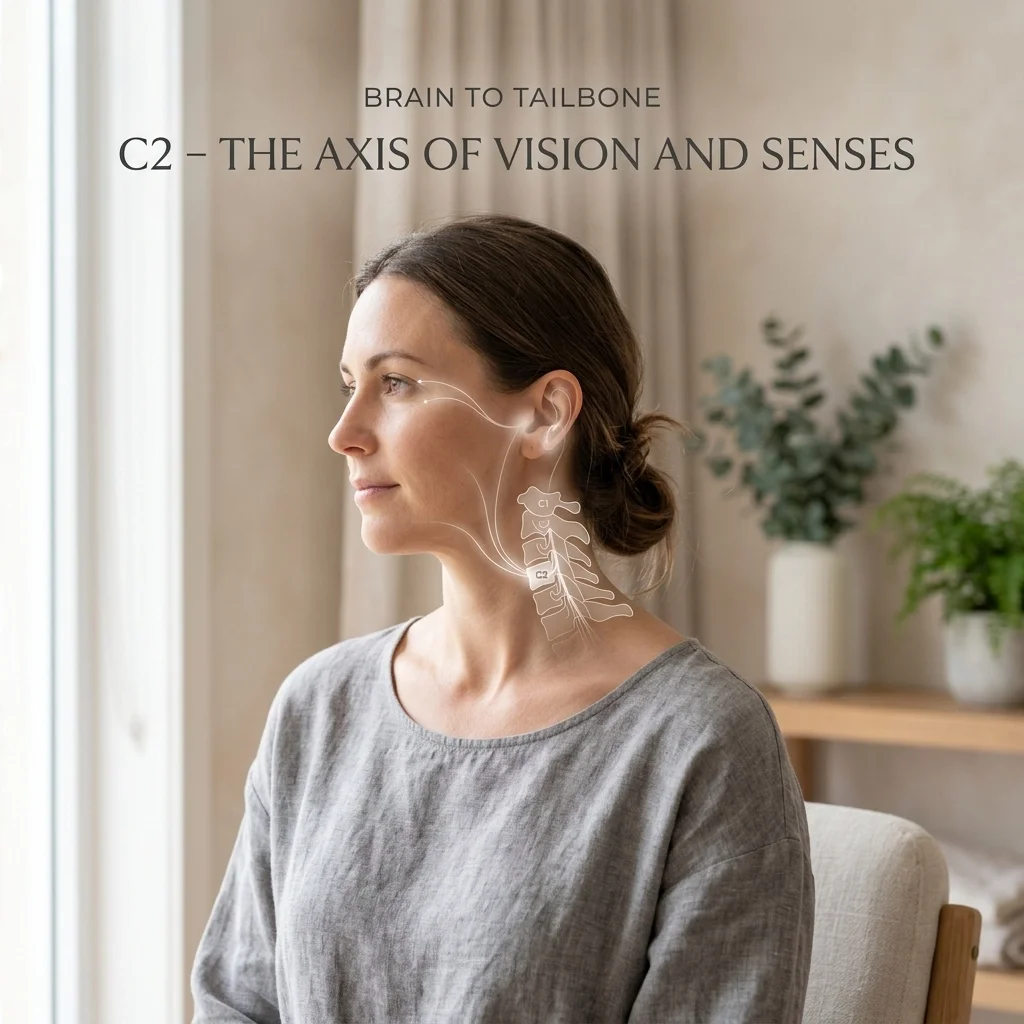
Welcome back to our comprehensive series, "Brain to Tailbone," where we explore the intricate architecture of the human spine and its profound impact on your daily health. In our previous installments, we laid the foundation of spinal health and looked upward at the Atlas (C1), the vertebra that holds the weight of your world.
Today, we move just a fraction of an inch down to the second cervical vertebra: C2, also known as the Axis.
If the Atlas is the "world-bearer," the Axis is the "navigator." While the C1 vertebra allows for the nodding motion of the head (the "yes" movement), the C2 vertebra is responsible for the rotation of the head (the "no" movement). But its role extends far beyond physical mobility. C2 serves as a primary neurological hub for our most vital sensory inputs: vision, hearing, and even our sense of Montclair and balance.
The Anatomy of the Pivot: Understanding the Axis
The C2 vertebra is structurally unique. Unlike any other bone in your spine, it features a distinct bony projection called the odontoid process, or the dens. This "peg" rises upward and fits perfectly into the ring of the Atlas above it. This specialized joint: the atlantoaxial joint: is responsible for nearly 50% of your head's total rotational range of motion.
Because of this unique design, the Axis is the literal pivot point for your perspective on the world. However, this high degree of mobility comes with a trade-off: vulnerability. The upper cervical spine lacks the interlocking "tabs" (facet joints) found in the lower spine that provide structural stability. Instead, C2 relies heavily on ligaments and muscle tone to stay in place. When these support structures are compromised by trauma, poor posture, or repetitive stress, the C2 can shift out of its proper alignment: a condition chiropractors call a subluxation.
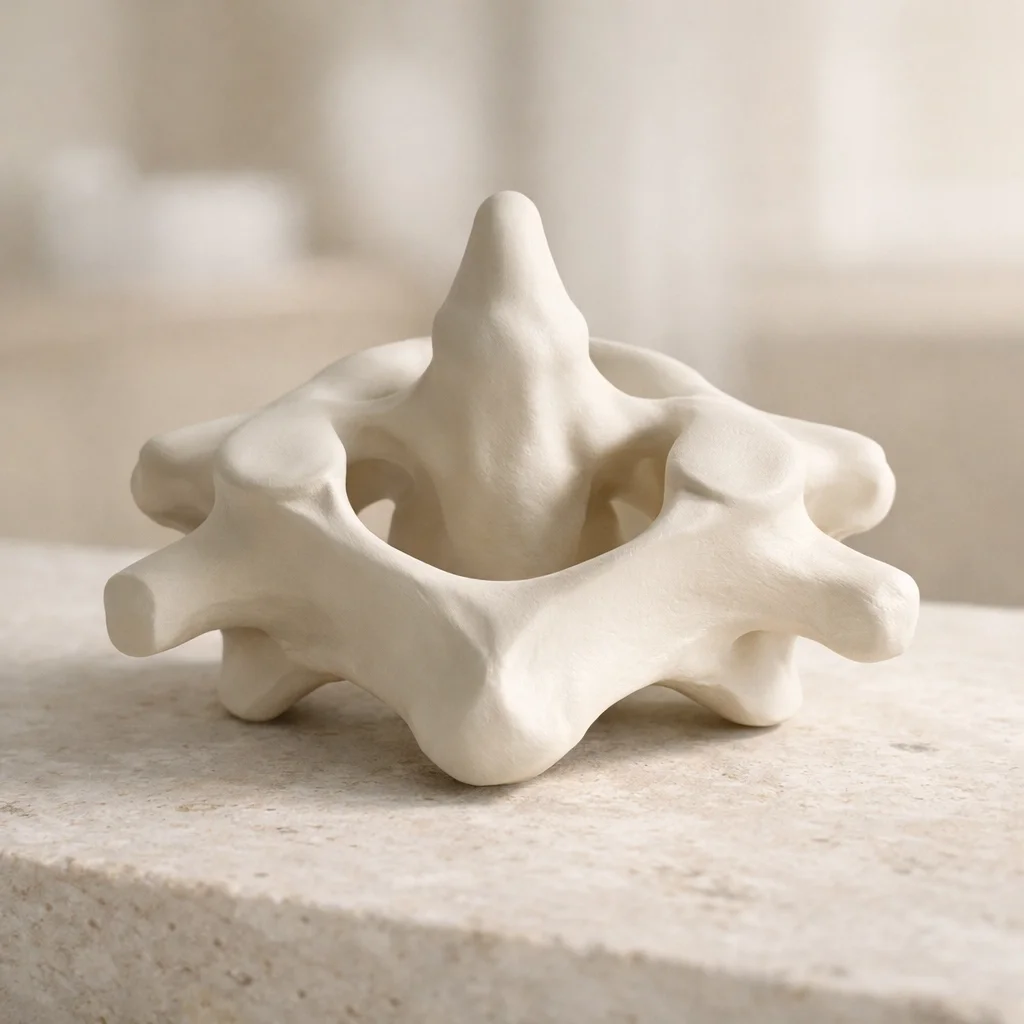
Visual: A detailed AI illustration of the C2 (Axis) vertebra, highlighting the odontoid process (dens) and its pivot-point relationship with the C1 (Atlas).
The Nerve Superhighway: What C2 Controls
In chiropractic care, we look at the spine not just as a stack of bones, but as a protective conduit for the nervous system. The nerves exiting the spine around the C2 vertebra are responsible for the innervation of several critical areas:
The Eyes and Optic Nerves: Directing visual focus and supporting the health of the ocular environment.
Auditory Nerves: Essential for hearing and processing sound.
The Sinuses and Mastoid Bones: Governing drainage and pressure regulation in the face and head.
The Tongue: Facilitating taste and the motor functions required for speech and swallowing.
The Forehead: Managing sensation across the upper third of the face.
When the C2 vertebra is properly aligned, signals between the brain and these sensory organs travel without interference. You see clearly, your sinuses drain effectively, and your equilibrium remains stable. However, when a subluxation occurs at the C2 level, it acts like static on a radio station, distorting the "messages" being sent to and from the brain.
Subluxation Signals: Is Your C2 Out of Alignment?
Because the Axis governs so much of our sensory input, the symptoms of a C2 misalignment are often felt in the "five senses" rather than just as simple neck pain. In fact, many patients at Carlucci Chiropractic & Wellness come to us for issues they didn't realize were spine-related.
Common signals that your C2 may be struggling include:
Sinus Trouble and Allergies: Chronic congestion or "seasonal" allergies that never seem to clear up may be linked to the nerve supply responsible for sinus drainage.
Visual Disturbances: This can include eye strain, difficulty focusing, or even "crossed eyes" (strabismus) in some cases. If you find yourself constantly adjusting your workstation, you might want to read our guide on how to beat tech neck and headaches.
Earaches and Auditory Issues: Tinnitus (ringing in the ears) or a feeling of "fullness" in the ear canal can often be traced back to upper cervical tension affecting the auditory nerves.
Fainting Spells and Dizziness: Because the vertebral arteries pass through the C2, a misalignment can interfere with blood flow to the brain, leading to lightheadedness or fainting spells.
Forehead Headaches: Tension often manifests as a dull ache across the forehead or behind the eyes. We often tell our patients that the headache you keep ignoring might be your body's check engine light.

Visual: A nerve-organ connection chart showing the path from the C2 vertebra to the eyes, ears, sinuses, and tongue, illustrating how spinal health dictates sensory function.
The Clinical Connection: The Brainstem and the Glymphatic System
Beyond the local sensory organs, the C2 vertebra sits in a high-stakes neighborhood: the brainstem. The medulla oblongata, which controls involuntary functions like breathing and heart rate, extends down near the level of the C2.
Furthermore, recent research has highlighted the importance of the upper cervical spine in supporting the glymphatic system: essentially the brain's "dishwasher." When the C1 and C2 are misaligned, they can physically restrict the flow of cerebrospinal fluid, preventing the brain from flushing out metabolic waste. This can lead to "brain fog" and long-term cognitive fatigue. You can dive deeper into this fascinating process in our article on how chiropractic supports your glymphatic system.
The "Axis of Vision": A Deeper Look at Eye Health
It is no coincidence that C2 is called the Axis of Vision. The upper cervical spine structures directly impact the brainstem’s ability to process visual data.
When the Axis is misaligned, it can disrupt the balance between nociception (the perception of harmful stimuli) and proprioception (your brain's awareness of where your body is in space). If your brain is receiving conflicting information about the position of your head relative to your eyes, the result is often eye strain, light sensitivity, and even migraines. By restoring the proper alignment of C2, we often see patients report a "sharpening" of their vision and a significant reduction in the neurological fatigue associated with visual processing.
Why Precision Matters
At Carlucci Chiropractic & Wellness, we treat the C2 with the precision it deserves. Because the Axis is a pivot point, a "one-size-fits-all" adjustment is never the answer. We use detailed assessments to determine the exact direction of the misalignment.
Restoring the C2 is about more than just "cracking" the neck; it’s about removing the interference that prevents you from experiencing the world through your senses. Whether you are dealing with chronic sinus pressure, unexplained earaches, or the visual fatigue of a digital lifestyle, the answer may lie in the alignment of this single, remarkable bone.

Visual: A professional clinical setting showing a chiropractor performing a gentle, precise adjustment on a patient's upper cervical spine.
Your Path to Wellness
As we continue our journey from "Brain to Tailbone," we invite you to look at your health through a new lens. Your spine is the interface between your brain and your life. If the "navigator" (C2) is off course, the rest of the journey will feel strained.
If you’re experiencing any of the "subluxation signals" mentioned above, or if it's just been a while since your last spinal checkup, don't wait for the symptoms to become debilitating.
Ready to get your nervous system back on track?
Explore our resources, book an appointment, or check out our latest wellness products through our Linktree: https://linktr.ee/DrKCarlucci.
You can also learn more about our specific approach to care on our About Us page or browse our full blog for more insights into the "Brain to Tailbone" series.
Stay tuned for Part 4, where we move further down the cervical spine to explore the vertebrae that support your thyroid and heart health. Your journey to optimal wellness is just beginning!
