From Brain Fog to DNA: The Mystery of B12 and B13
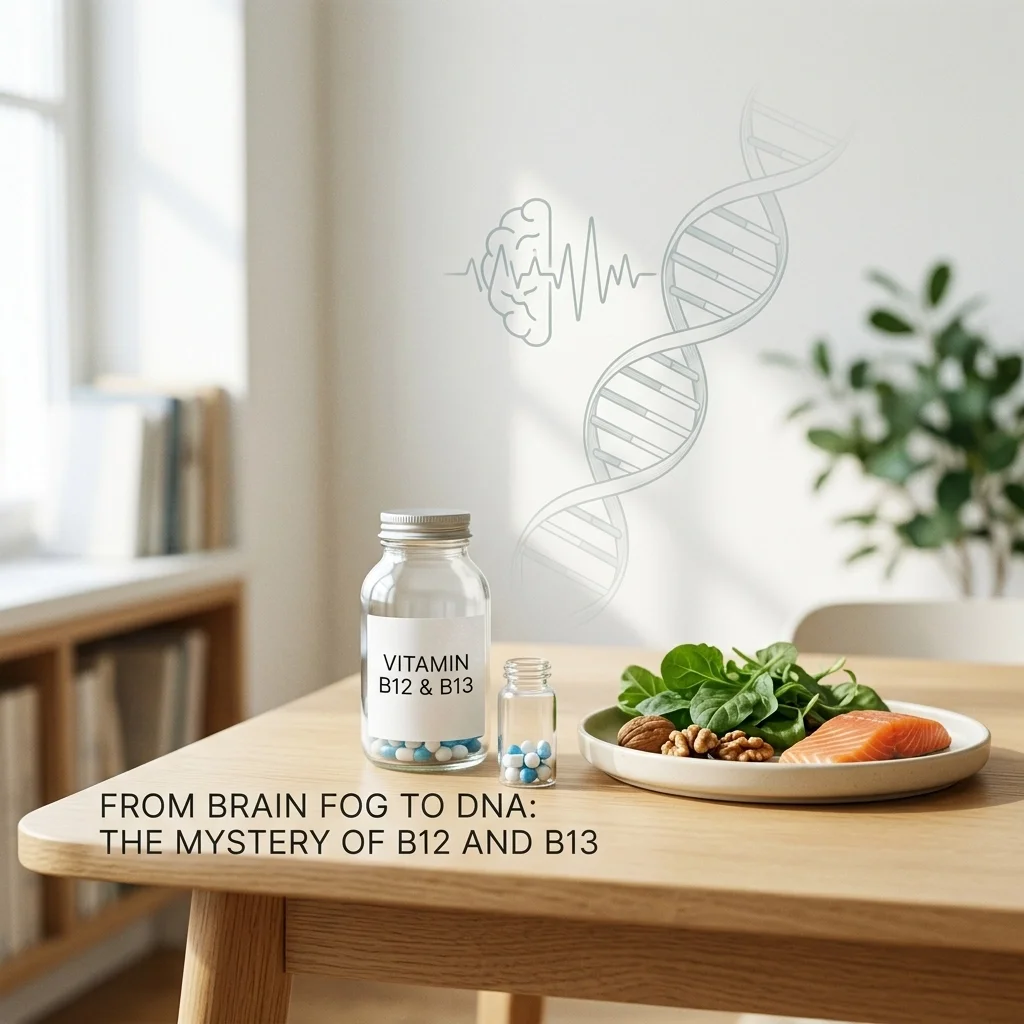
the "Powerhouse B’s." While most people are familiar with Vitamin B12 (Cobalamin), very few have heard of its mysterious cousin, Vitamin B13 (Orotic Acid). One is a spark plug for your brain, and the other is the hidden architect of your DNA.
Welcome back to our ongoing series, Vitamins from A-to-Z! At Carlucci Chiropractic & Wellness, we believe that true health isn’t just about the absence of pain; it’s about optimizing every cellular process in your body. To do that, you need the right fuel.
Today, we are diving deep into the "Powerhouse B’s." While most people are familiar with Vitamin B12 (Cobalamin), very few have heard of its mysterious cousin, Vitamin B13 (Orotic Acid). One is a spark plug for your brain, and the other is the hidden architect of your DNA.
If you’re enjoying this journey through the alphabet of health, make sure to like this post, subscribe to our newsletter, and follow our social media channels so you never miss an update as we work our way from Vitamin A all the way to Zinc!
Vitamin B12: The Neurological Spark Plug
If your body were a high-performance vehicle, Vitamin B12 (Cobalamin) would be the spark plug. Without it, the engine simply won't turn over. B12 is perhaps the most famous of the B-complex family, and for good reason: it is foundational to your neurological health and energy levels.
Clearing the Brain Fog
Have you ever walked into a room and forgotten why you were there? Or perhaps you struggle to focus on tasks that used to be second nature? This is often described as "brain fog," and it is one of the primary "check engine lights" of a Vitamin B12 (Cobalamin) deficiency.
Vitamin B12 (Cobalamin) is essential for the production of the myelin sheath. Think of your nerves as electrical wires; the myelin sheath is the protective rubber insulation around those wires. When this insulation wears thin, nerve signals slow down or "short-circuit." This leads to the cognitive sluggishness we associate with brain fog. By maintaining healthy Vitamin B12 (Cobalamin) levels, you are effectively ensuring that your brain's "wiring" is insulated and efficient. When supplementation is needed, we generally recommend the methylated form, Methylcobalamin, because it is typically better absorbed and more readily used by the body.

Women relaxed serenely looking out her window
The Energy Connection
Vitamin B12 (Cobalamin) is also a key player in the formation of red blood cells. These cells are responsible for carrying oxygen to your brain and muscles. If your Vitamin B12 (Cobalamin) levels are low, your red blood cells can become abnormally large and inefficient (a condition known as megaloblastic anemia). When your tissues aren't getting enough oxygen, you feel more than just tired: you feel exhausted at a cellular level.
For many of our patients, we look at the gateway to brain health to ensure the nervous system is communicating properly. But even with a perfect adjustment, if the chemical "spark plug" of Vitamin B12 (Cobalamin) is missing, the system won't run at 100%.
Vitamin B13: The DNA Architect (Orotic Acid)
Now, let’s move into the shadows of nutritional science to talk about Vitamin B13, also known as Orotic Acid. You won’t find B13 in most standard multivitamins, and it doesn't get much time in the limelight. In fact, many decades ago, it lost its "official" status as a vitamin.
Why? Because of the definition of the word "essential."
Essential vs. Non-Essential: The B13 Mystery
In the world of nutrition, an essential nutrient is something your body cannot make on its own. You must eat it or supplement it to survive. Vitamin C is essential; Vitamin B12 (Cobalamin) is essential.
Vitamin B13 (Orotic Acid), however, is classified as non-essential. But don't let that label fool you. It doesn't mean your body doesn't need it; it means your body is so brilliant that it has its own internal factory to produce it!
A test scientific beaker, a Petri dish and a green leaf
Your Internal Factory: The Microbiome
So, where does Vitamin B13 (Orotic Acid) come from if we don't necessarily need to eat it? There are two main sources:
Cellular Synthesis: Your mitochondria and various metabolic pathways produce orotic acid as part of the process of building DNA and RNA.
The Microbiome: This is the most fascinating part. The trillions of bacteria living in your gut: your microbiome: actually synthesize Vitamin B13 (Orotic Acid) for you.
This is why gut health is so vital. If your microbiome is out of balance (dysbiosis), your internal production of "non-essential" nutrients like B13 can drop. This is another reason we often talk about vagus nerve resets, as the vagus nerve is the primary communication line between your brain and your "gut factory."
The Role of the DNA Architect
If Vitamin B12 (Cobalamin) is the spark plug, Vitamin B13 (Orotic Acid) is the DNA Architect. Its primary job is to help manufacture pyrimidines, which are the building blocks of your genetic material (DNA and RNA).
Without Vitamin B13 (Orotic Acid), your body struggles to repair damaged cells and create new ones. This makes Vitamin B13 (Orotic Acid) particularly important for:
Muscle Recovery: Athletes often use orotic acid to help transport minerals like magnesium into cells, aiding in tissue repair after a workout.
Heart Health: Vitamin B13 (Orotic Acid) helps the heart muscle maintain energy levels under stress.
Liver Support: It aids in the metabolism of fats, preventing "fatty liver" issues.
While you don't have to take a supplement to get it, you can find small amounts of Vitamin B13 (Orotic Acid) in nature, specifically in whey (from dairy) and root vegetables like beets and carrots.

Fresh carrots and beets with greens still on the tops
How B12 and B13 Work Together
Health is never about a single nutrient; it’s about synergy. Vitamin B12 (Cobalamin) and Vitamin B13 (Orotic Acid) work in tandem to protect your genetic integrity. While Vitamin B13 (Orotic Acid) helps build the DNA architecture, Vitamin B12 (Cobalamin) is required for methylation, the process that actually "reads" and "activates" that DNA properly.
Think of it this way: Vitamin B13 (Orotic Acid) builds the library (your DNA), and Vitamin B12 (Cobalamin) is the librarian who knows how to find the right books and put them to work. If either one is missing, the library becomes useless.
The Chiropractic Connection: Fueling the System
At Carlucci Chiropractic & Wellness, we see the body as an integrated whole. Your spine houses the nervous system, which acts as the "electrical grid" for your body. However, an electrical grid is only as good as the power flowing through it.
If you are suffering from chronic issues like sciatica or headaches from tech neck, the physical structure of your spine is a major factor. But your recovery speed is dictated by your biochemistry.
Vitamin B12 (Cobalamin) ensures your nerves can heal and fire correctly.
Vitamin B13 (Orotic Acid) ensures your cells have the blueprints they need to rebuild damaged tissue.
When we combine chiropractic adjustments with sound nutritional advice, we aren't just masking symptoms; we are giving your body the tools it needs to heal from the inside out.

Four smooth grey stones balancing on each other from smallest to largest with the largest at the bottom
Are You Running on Empty?
Because Vitamin B12 (Cobalamin) is found primarily in animal products, vegetarians and vegans are at a much higher risk for deficiency. Additionally, as we age, our stomach acid decreases, making it harder to absorb Vitamin B12 (Cobalamin) from food. When supplementation is appropriate, the methylated form, Methylcobalamin, is often preferred for better absorption and effectiveness.
For Vitamin B13 (Orotic Acid), the "deficiency" isn't usually about what you eat, but about how your gut is functioning. If you have been taking antibiotics, have a poor diet, or deal with chronic stress, your microbiome factory might be "closed for repairs," leaving you low on this DNA Architect.
Signs You Might Need a Boost:
Persistent fatigue that doesn't go away with sleep.
Tingling or "pins and needles" in your hands and feet.
A "fuzzy" memory or inability to concentrate.
Slow recovery times after physical exercise.
Follow Along the A-to-Z Journey!
We are just getting started! Understanding the difference between essential vitamins like Vitamin B12 (Cobalamin) and non-essential-but-vital nutrients like Vitamin B13 (Orotic Acid) is just the tip of the iceberg.
Our goal is to empower you with the knowledge to take control of your health. Whether it's through a vagus nerve reset or a deep dive into anti-inflammatory foods, we are here to guide you.
Don't miss out on the rest of the alphabet!
Like this post if you learned something new about Vitamin B13 (Orotic Acid) today.
Subscribe to our blog to get the next installment delivered straight to your inbox.
Follow us on social media for daily health hacks and tips from Dr. Carlucci.
If you’re feeling stuck in a cycle of brain fog and fatigue, don't ignore it. That’s your body’s "check engine light" telling you something is off. Reach out to us at Carlucci Chiropractic & Wellness to schedule a consultation. Let’s get your "spark plugs" firing and your "architects" building again.
Contact us today to start your wellness journey.
Disclaimer: This content is for educational purposes only and is not medical advice. Always consult with your healthcare provider before starting any new supplement or treatment.
#VitaminB12 #Methylcobalamin #VitaminB13 #OroticAcid #AtoZVitamins #FunctionalMedicine #ChiropracticWellness #DrCarlucci #Methylation #DNAHealth
