Brain to Tailbone: C1 – The Atlas and Your Whole-Body Balance
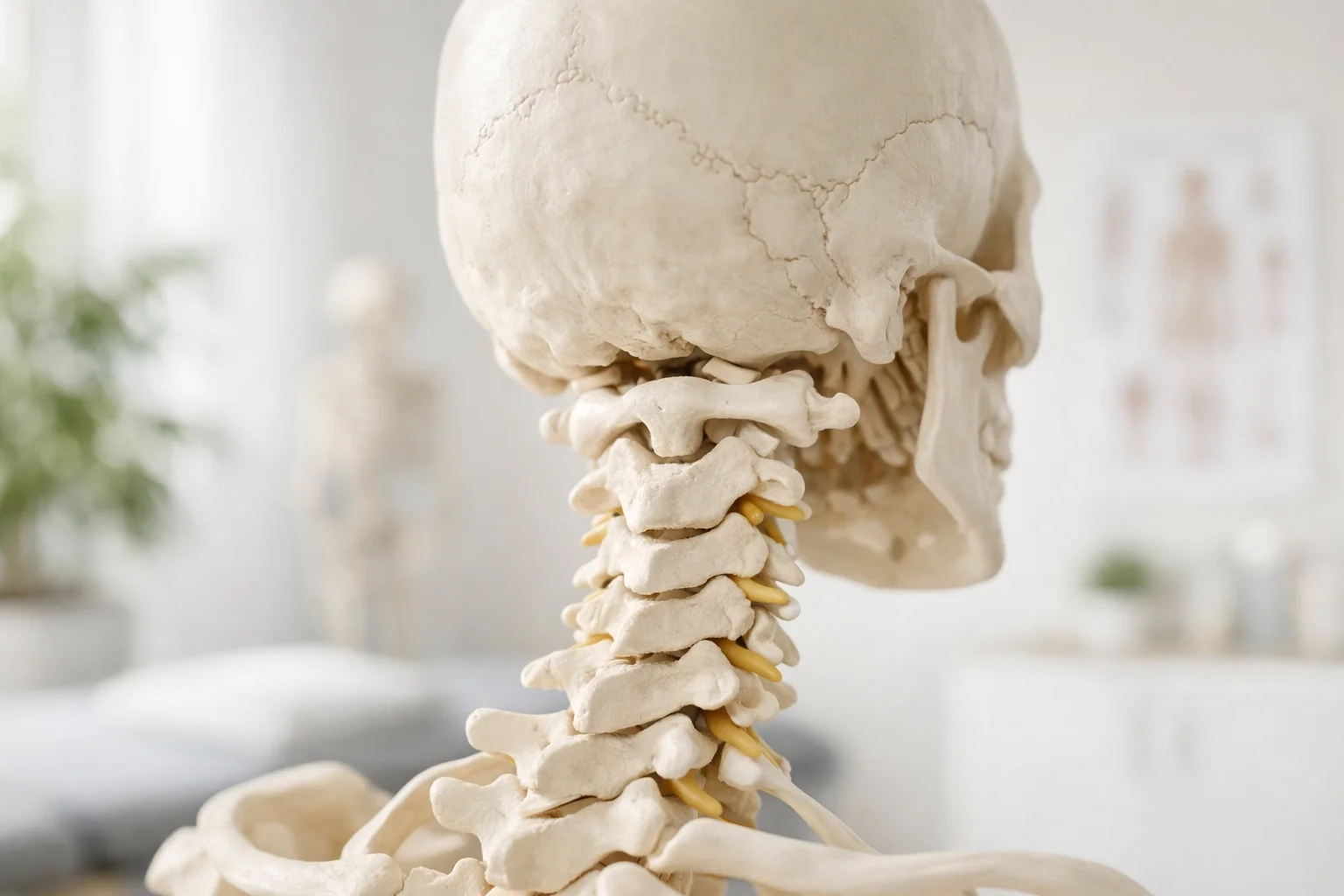
In Greek mythology, Atlas was the Titan condemned to hold up the heavens on his shoulders for eternity. In human anatomy, we have our own version of Atlas, and while it doesn’t support the entire sky, it does something equally monumental: it supports your "world", your head.
Welcome to Part 2 of our "Brain to Tailbone" series. If you missed Part 1, we are diving deep into the spinal column, segment by segment, to understand how your physical structure dictates your physiological function. Today, we are focusing on the very top of the tower: C1, also known as the Atlas.
At Carlucci Chiropractic & Wellness, we often say that the Atlas is the most critical bone in the human body. Why? Because it sits at the intersection of your brain and your body. It is the gatekeeper of your nervous system. When the Atlas is happy, your body has a fighting chance at balance. When it’s out of alignment, the "check engine light" doesn’t just blink; it starts a chain reaction that can be felt all the way down to your toes.
The Anatomy of the Ring
The Atlas is unique. Unlike the other vertebrae in your spine, the Atlas doesn’t have a "body" (the thick, puck-like part of most vertebrae) or a spinous process (the bony bump you feel when you rub your neck). Instead, it is shaped like a delicate, sophisticated ring.
This ring-like structure allows it to cradle the base of your skull. It is responsible for approximately 50% of your head's total rotation. When you shake your head "no," you are largely using the joint between the Atlas and the axis (C2) below it.
However, because the Atlas has such a wide range of motion and lacks the interlocking "tabs" (facets) that provide stability to the lower spine, it is also the most easily misaligned bone in the body. A fall, a car accident, poor sleeping positions, or even the repetitive strain of "tech neck" can cause this 2-ounce bone to shift, putting pressure on the 10-to-12-pound head sitting on top of it.
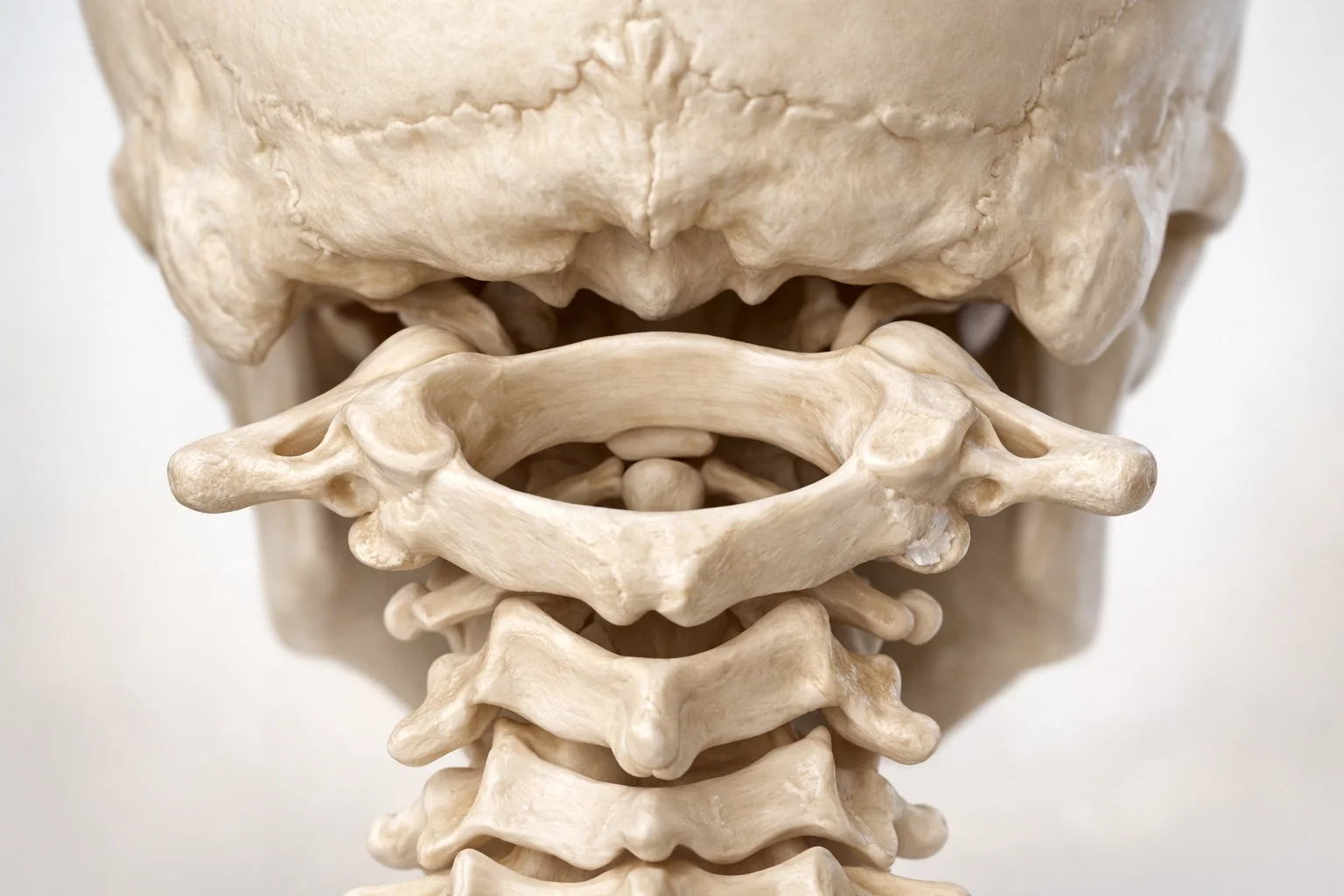
Visual Description: An AI-generated close-up illustration of the C1 (Atlas) vertebra, highlighting its unique ring-like shape and its position directly beneath the base of the skull, showing the transition from the brainstem into the spinal cord.
The Neurological Master Key
The Atlas isn’t just a structural support; it is a neurological hub. The opening in the center of the Atlas ring is where the brainstem: the most primitive and vital part of your brain: transitions into the spinal cord.
The brainstem controls the functions you don't have to think about: breathing, heart rate, blood pressure, and digestion. It is also the "dishwasher" for your brain. As we’ve discussed in our post about the brain’s glymphatic system, proper spinal alignment is crucial for the drainage of metabolic waste from the brain. If the Atlas is tilted or rotated, it acts like a kink in a garden hose, potentially obstructing the flow of cerebrospinal fluid and nerve signals.
What Does C1 Control? (Innervation Map)
In chiropractic, we look at "innervation": which nerves go to which organs. The nerves exiting around the C1 area are responsible for the health and function of:
Blood supply to the head: This includes the vertebral arteries that feed the brain.
The Pituitary Gland: Known as the "Master Gland," it controls your growth, metabolism, and reproductive system.
The Scalp and Bones of the Face: Sensations and structural health of the head.
The Brain itself: Overall cognitive clarity and processing.
Inner and Middle Ear: Your sense of balance and hearing.
The Sympathetic Nervous System: Your "fight or flight" response.
Because the Atlas is so closely tied to the sympathetic nervous system, a misalignment here can keep your body in a state of perpetual high alert. This is why patients with C1 subluxations often feel "wired but tired" or struggle with an inability to relax.
Subluxation Signals: When the Atlas is Asking for Help
When the Atlas loses its proper alignment: a condition we call subluxation: it interferes with the vital communication between the brain and the rest of the body. Because C1 innervates so many critical areas, the symptoms can be diverse and seemingly unrelated.
At Carlucci Chiropractic & Wellness, we often see these "signals" in patients with C1 issues:
1. Chronic Headaches and Migraines
The Atlas is a frequent culprit behind tension headaches and debilitating migraines. When the bone shifts, it can irritate the nerves traveling into the scalp or restrict blood flow. If you feel like your headache is a check engine light, your Atlas is likely the reason why.
2. Dizziness and Vertigo
Since C1 is responsible for the nerves leading to the inner ear, a misalignment can throw off your body's internal GPS, leading to feelings of dizziness, lightheadedness, or full-blown vertigo.
3. High Blood Pressure
Clinical studies have shown a fascinating link between the Atlas and hypertension. When the Atlas is adjusted, it can relieve pressure on the brainstem areas that regulate blood pressure, leading to a natural stabilizing effect.
4. Insomnia and Nervousness
Because C1 affects the sympathetic nervous system, a subluxation can prevent the "rest and digest" system from taking over. This leads to racing thoughts, anxiety, and the inability to fall or stay asleep.
5. Chronic Tiredness and Brain Fog
If the blood supply to the brain is compromised even slightly, or if the "dishwasher" effect of CSF flow is hampered, you will likely feel sluggish, forgetful, and chronically exhausted.
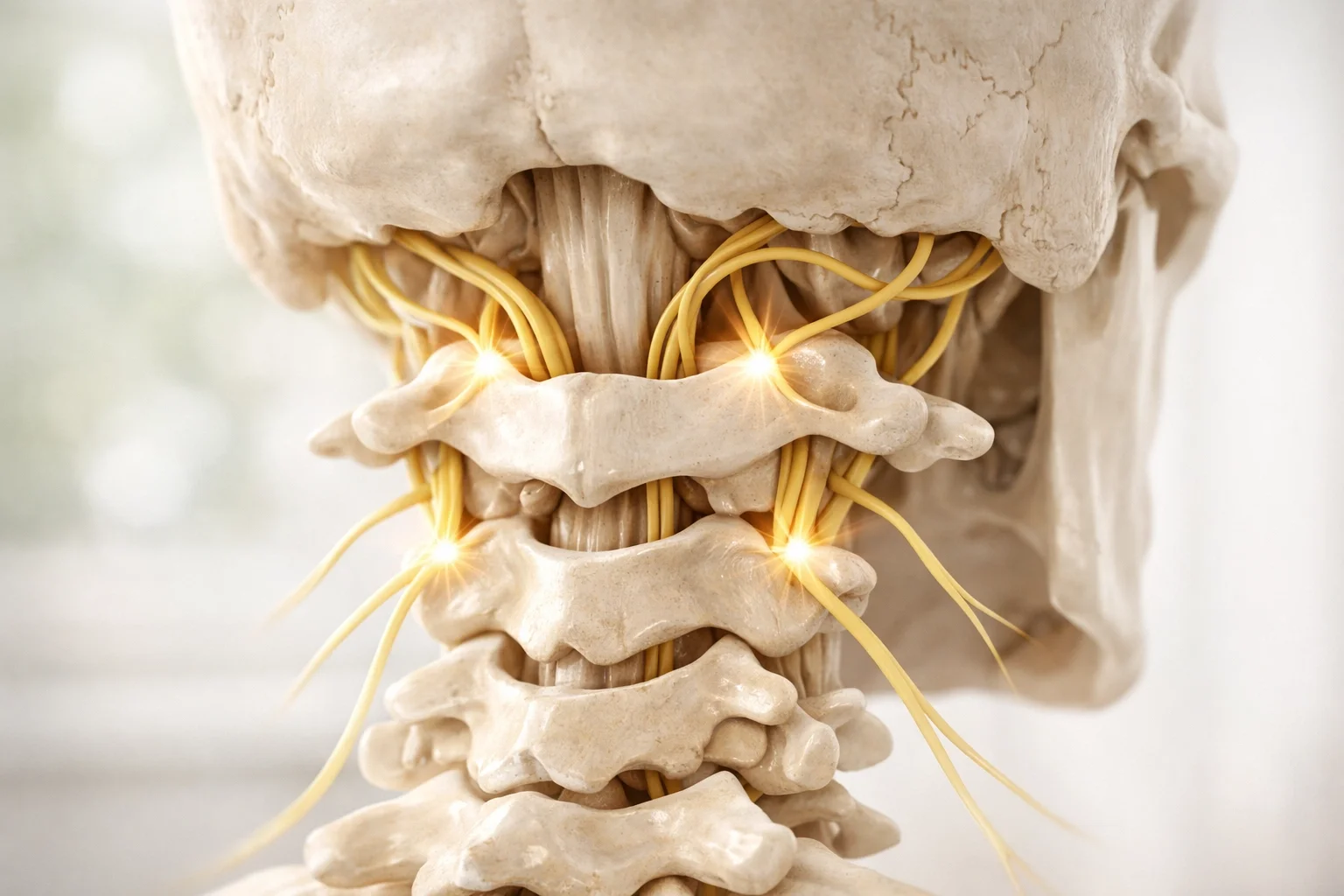
Visual Description: A clinical nerve-organ connection chart showing the C1 vertebra with lines connecting it to the brain, pituitary gland, ears, and eyes, listing common symptoms of misalignment.
The Great Compensator: How C1 Affects Your Tailbone
One of the most common questions I get at the clinic is: "Why are you adjusting my neck when my lower back hurts?"
Think of your spine like a vertical chain hanging from the ceiling. If you twist the top link (the Atlas), every link below it must shift to keep the chain hanging straight. Your brain insists on keeping your eyes level with the horizon. If the Atlas is tilted, your brain will force the rest of your spine to compensate.
This means a C1 misalignment can cause:
One shoulder to be higher than the other.
A "functional" short leg.
Pelvic tilting and lower back pain.
Often, we find that stubborn sciatica or hip pain is actually a compensation for a problem starting at the very top. By addressing the Atlas, we allow the rest of the spine to unwind naturally. This is why we focus so much on the sciatica recovery mistakes people make: ignoring the neck is often one of them!
The Chiropractic Approach to the Atlas
At Carlucci Chiropractic & Wellness, adjusting the Atlas is a precise and gentle process. Because this area is so sensitive and vital, we use specific techniques to ensure the alignment is restored without unnecessary force.
Whether you are struggling with tech neck from remote work or dealing with chronic migraines that won't quit, our goal is to clear the interference at the C1 level so your body can heal itself.
When the Atlas is aligned:
Nerve signals travel at 100% capacity.
Blood flow to the brain is optimized.
The "fight or flight" system calms down.
Your whole-body balance is restored.
Final Thoughts
The Atlas truly carries the weight of your world. If you’ve been feeling "off balance," struggling with sleep, or dealing with persistent headaches, it might be time to look at the gatekeeper of your health. Your spine is a masterpiece of engineering, but it all starts at the top.
Are you ready to see how a clear connection from brain to tailbone can change your life?
Connect with us, book an appointment, or explore our wellness resources here:
https://linktr.ee/DrKCarlucci
Stay tuned for Part 3, where we move down to C2: the Axis: and explore how it works in tandem with the Atlas to keep you moving!
Disclaimer: This blog post is for informational purposes only and does not constitute medical advice. Always consult with a qualified healthcare professional for diagnosis and treatment.
