
Brain to Tailbone: C0 – The Gateway to Brain Health
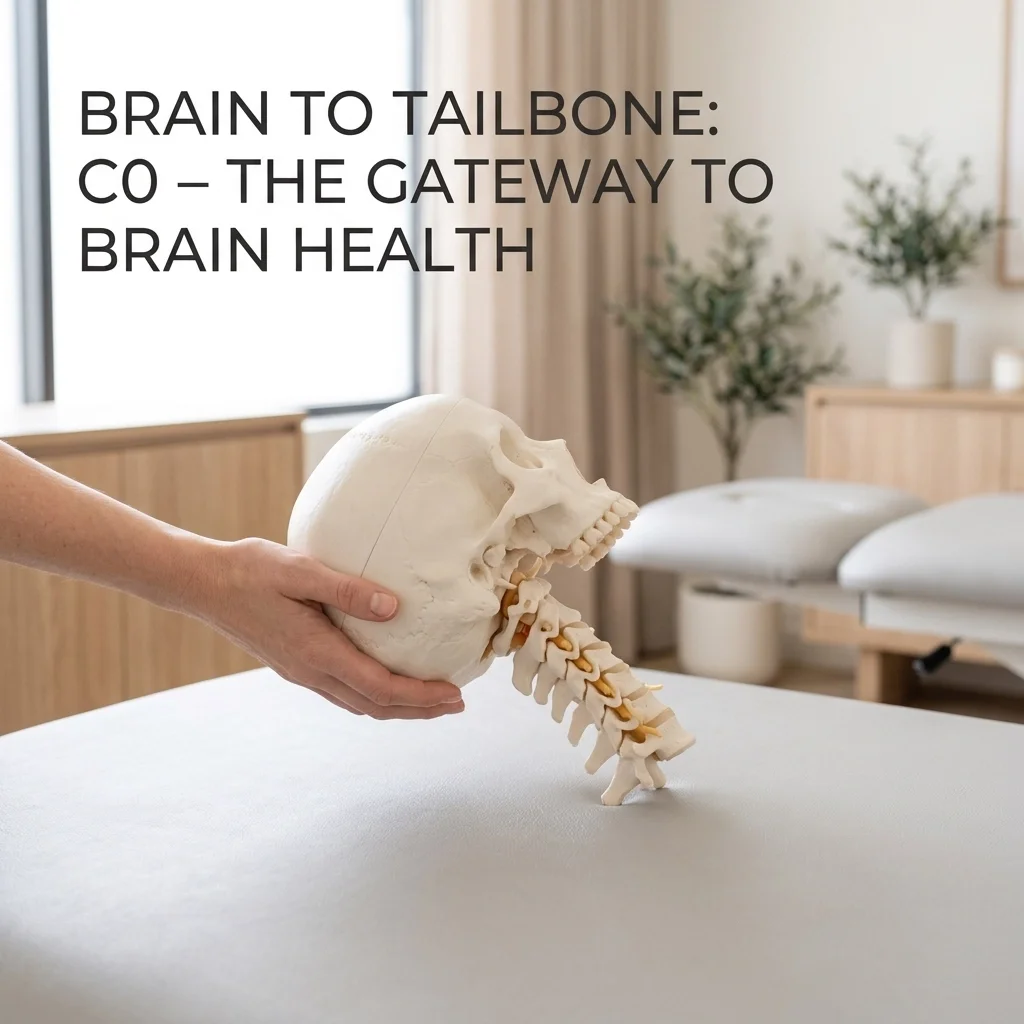
hands holding a replica of the skull and cervical spine
Welcome to the first installment of our "Brain to Tailbone" series. Over the coming weeks, we are going to take a deep dive into the human spine, level by level. At Carlucci Chiropractic & Wellness, we believe that understanding your anatomy is the first step toward mastering your health. Your spine isn't just a stack of bones; it is the protective casing for your nervous system: the master controller of every cell, tissue, and organ in your body.
Today, we begin at the very top: C0.
In clinical terms, C0 refers to the Occiput, or the base of the skull, where it articulates with the first cervical vertebra (the Atlas). While many people focus on the vertebrae themselves, the junction where your brain exits the skull to become the spinal cord is perhaps the most critical "gateway" in the entire human body. If this gateway is closed or restricted, the ripple effects can be felt from your head to your toes.
Defining C0: The Foundation of the Foundation
While "C1" (the Atlas) often gets the spotlight in upper cervical care, C0: the Occipito-atlantal joint: is where the magic truly begins. This is the structural meeting point between the head's skeletal system and the spine's locomotive system.
The occipital bone houses the foramen magnum, the large opening that allows the brainstem to transition into the spinal cord. When we talk about "C0" in a chiropractic context, we are looking at the alignment of the skull itself on top of the spine. If the skull is tilted, rotated, or shifted even a fraction of a millimeter, it creates mechanical stress on the very structures responsible for keeping you alive and conscious.
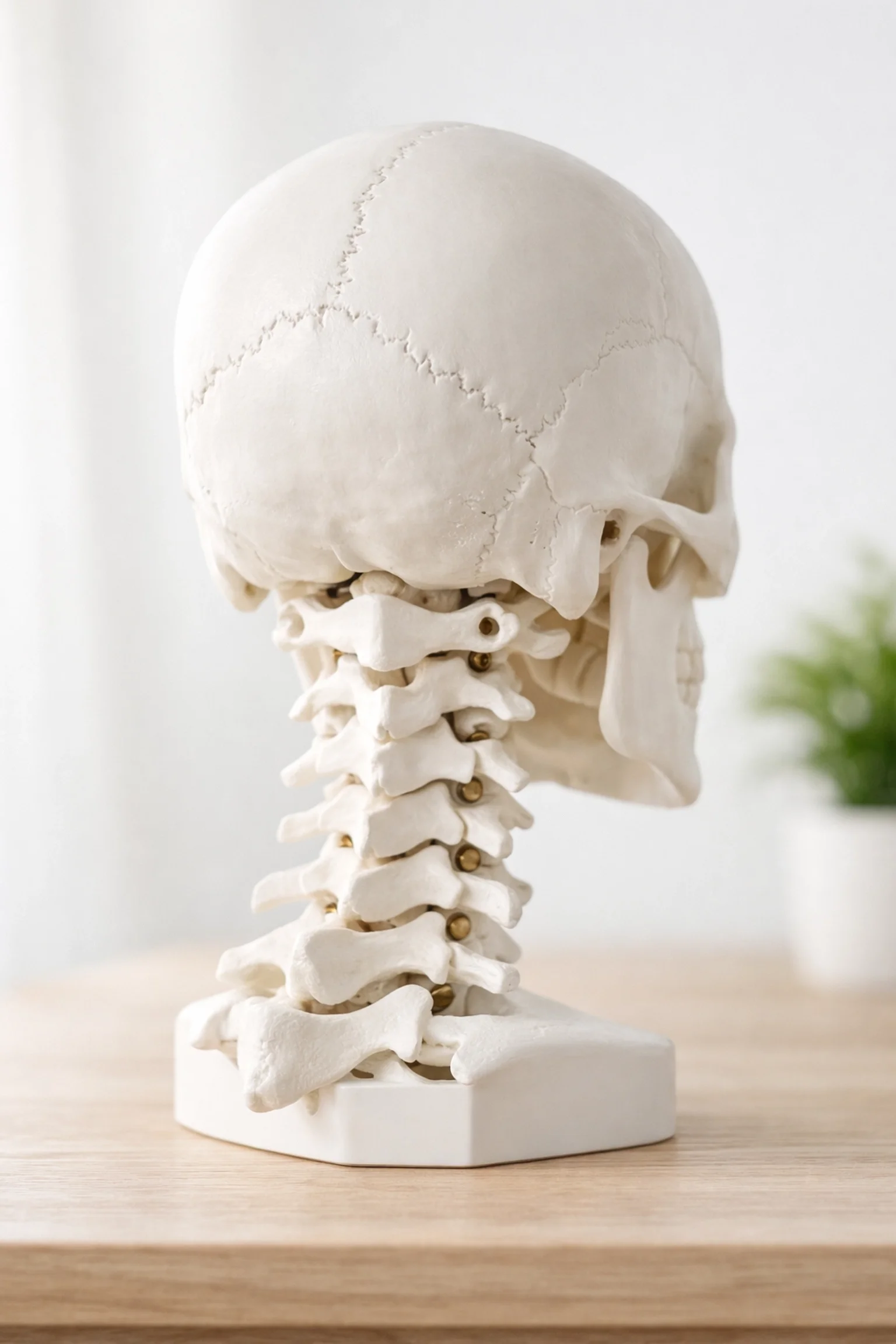
Visual Description: An AI-generated illustration showing the base of the human skull (C0 region) highlighted in a soft blue glow, illustrating the delicate transition from the brainstem through the foramen magnum into the upper cervical spine.
The Neurology of the Gateway
Why do we call C0 the "Gateway to Brain Health"? It’s because of what passes through and around this region. The neurological and vascular "traffic" at the base of your skull is immense.
1. Blood Supply to the Head
The vertebral arteries travel up through the neck and enter the skull right at the C0/C1 junction. These arteries provide the primary blood supply to the posterior part of the brain, including the cerebellum and the brainstem. If there is a subluxation (a misalignment causing nerve interference) at the C0 level, it can impede optimal blood flow. This is why many patients suffering from chronic brain fog or "heavy-headedness" find relief after an upper cervical adjustment.
2. The Pituitary Gland
The C0 level is neurologically linked to the pituitary gland: the "Master Gland." The pituitary gland controls your growth, metabolism, and reproductive systems. By ensuring the upper cervical region is free of interference, we are supporting the hormonal balance of the entire body.
3. The Sympathetic Nervous System
The upper neck heavily influences your "fight or flight" response. The suboccipital nerves, which sit just below C0, are in constant communication with the brain about the position of your head in space. If these nerves are sending "stress" signals due to poor posture or misalignment, your body remains in a state of high alert, leading to chronic stress and burnout.
Subluxation Signals: Is Your C0 Out of Alignment?
When the gateway is restricted, your body doesn't stay silent. It sends out "check engine lights" in the form of symptoms. At Carlucci Chiropractic & Wellness, we look past the symptom to find the source. If you are experiencing any of the following, C0 may be the culprit:
Headaches and Migraines: This is the most common signal. Tension at the base of the skull often radiates forward, causing that classic "behind the eyes" pressure. You can read more about why the headache you keep ignoring might be your body’s check engine light.
Insomnia and Nervousness: Because C0 affects the sympathetic nervous system, a misalignment here can make it nearly impossible for your brain to "shut off" at night.
Dizziness and Vertigo: The C0 region is vital for your sense of balance and proprioception.
High Blood Pressure: Clinical studies have shown a strong link between upper cervical alignment and the regulation of blood pressure via the brainstem.
Mental Breakdowns or Emotional Instability: When the "Gateway" is jammed, it affects the glymphatic system: the brain's waste clearance system. For more on this, check out our post on the brain’s dishwasher.
The Modern Enemy: Tech Neck at C0
In 2026, we are seeing more C0 issues than ever before. Why? Because of the way we look at our devices. When you tilt your head down to look at a phone, you are placing up to 60 pounds of pressure on the C0/C1 junction. This "Tech Neck" doesn't just hurt your muscles; it physically shifts the occiput on the atlas, narrowing the gateway for blood and nerve flow.
If you are working remotely or spend hours on a laptop, it is essential to understand how to beat tech neck and headaches while working remotely. The strategy begins with correcting the alignment at the very top.

A professional nerve-organ chart snippet focusing on the C0/Occipital region. Lines connect the base of the skull to the brain, pituitary gland, and inner ear, listing symptoms like migraines and dizziness alongside the affected organs.
How Chiropractic Restores the Gateway
At Carlucci Chiropractic & Wellness, our approach to C0 is precise and gentle. We don't just "crack" the neck; we analyze the relationship between the skull and the spine. By restoring the proper position of the occiput, we:
Release Dural Tension: The dura mater (the protective "skin" of the brain and spinal cord) attaches physically to the bones at the C0-C3 level. Misalignment pulls on this "skin," creating tension throughout the entire central nervous system.
Improve CSF Flow: Cerebrospinal fluid (CSF) must flow freely between the brain and the spine. C0 alignment acts as the "pump" or the "blockage" for this flow.
Calm the Nervous System: An adjustment at C0 can often take a patient from a state of "High Stress" to "Deep Relaxation" in a matter of minutes.
Whether you are looking for chiropractic in Montclair, NJ, or are simply following our "Brain to Tailbone" series from afar, it is important to realize that health flows from the top down and the inside out.
Mapping the Connections: The Nerve-Organ Chart
To help you visualize why C0 is so vital, let’s look at the specific areas it innervates. In chiropractic science, we use nerve charts to show which spinal levels correlate with specific body parts.
If you recognize yourself in that right-hand column, it isn't a sign that you are "getting old" or that you are "just a stressful person." It is a sign that your Gateway to Brain Health may be obstructed.
Conclusion: Opening the Gateway
As we progress through this series, moving from the neck down to the tailbone, remember that C0 is the leader. If the leader is off, the rest of the spine will compensate. A tilt at the base of the skull will eventually lead to a high shoulder, a tilted pelvis, and even sciatica. If you've been struggling with lower back issues, the solution might actually start at the top. You can learn more about sciatica recovery and how we fix it, but always remember the spine works as a single, unified unit.
Your brain deserves a clear pathway to communicate with your body. Don't let a subluxation at the gateway hold you back from your full potential.
Ready to check your Gateway?
If you’re ready to experience the clarity that comes with a properly aligned upper cervical spine, we are here to help. From clinical adjustments to wellness products, we provide the tools you need for a vibrant life.
Connect with us and book your assessment here:
https://linktr.ee/DrKCarlucci
Stay tuned for Part 2 of the "Brain to Tailbone" series, where we move down to C1 (The Atlas): the bone that carries the weight of your world.
