
Why Everyone Is Talking About Vagus Nerve Resets (And How to Do It Right)

Spring has officially arrived in New Jersey. As the cherry blossoms start to pop in Montclair and the greenery returns to the parks in Whippany and Lyndhurst, most of us are thinking about "spring cleaning." We scrub the baseboards, declutter the garage, and swap out our heavy winter coats for lighter layers.
But at Carlucci Chiropractic & Wellness, we want to talk about a different kind of spring cleaning, one that happens inside your body.
If you’ve spent more than five minutes on social media lately, you’ve probably seen influencers splashing cold water on their faces, humming loudly, or massaging their necks, all in the name of a "Vagus Nerve Reset." It’s the wellness trend of the year, but unlike some "hacks," this one is actually backed by serious science.
The question is: is it just a fad, or is it the missing link to your chronic stress, digestive issues, and brain fog? With over 25 years of experience in holistic, root-cause care, we’re here to help you separate the TikTok "fluff" from the functional medicine facts.
What is the Vagus Nerve, Anyway?
The word "vagus" means "wandering" in Latin, which is the perfect name for this nerve. It is the longest cranial nerve in your body, starting at the base of your brain and "wandering" all the way down to your abdomen. Along the way, it touches almost every major organ: your heart, lungs, stomach, and liver.
Think of the vagus nerve as the "superhighway" of your Parasympathetic Nervous System (PNS). In the world of chiropractic care, we often talk about the balance between "Fight or Flight" (Sympathetic) and "Rest and Digest" (Parasympathetic).
When your vagus nerve is functioning optimally, your body can easily shift into "Rest and Digest" mode. You feel calm, your digestion is smooth, and your heart rate stays steady. This is what we call "high vagal tone."
However, when life in North Jersey gets hectic: balancing commutes, work, and family: your body can get stuck in "Fight or Flight." Over time, your vagal tone drops, leaving you feeling wired, tired, and inflamed.

Why is Everyone Talking About It Right Now?
The surge in interest isn't just about social media trends. Modern medicine is finally catching up to what holistic practitioners have known for decades: the gut-brain connection is real, and the vagus nerve is the bridge.
In 2025 and 2026, the FDA has made headlines by approving new medical devices for vagus nerve stimulation to treat everything from treatment-resistant depression to rheumatoid arthritis. Researchers are discovering that by "hacking" this nerve, we can actually turn down the volume on systemic inflammation.
For our patients in Montclair and Whippany, this is a game-changer. We aren't just looking at back pain; we’re looking at how your nervous system communicates. If your "check engine light" is on (chronic headaches, anxiety, or bloating), the vagus nerve is often the first place we look. You can read more about how your body uses these signals in our post on the headache you keep ignoring.
Signs Your Vagus Nerve Needs a "Reset"
How do you know if your vagal tone is low? Because the nerve is so long and touches so many systems, the symptoms can show up in unexpected ways:
Digestive Woes: Chronic bloating, IBS, or acid reflux (the vagus nerve controls stomach acid and gut motility).
Anxiety and Panic: Feeling like you can’t catch your breath or settle down.
Brain Fog: Feeling "clogged up" mentally. This is often linked to the glymphatic system: the "brain's dishwasher": which you can learn more about here.
Difficulty Swallowing: That "lump in your throat" feeling when you’re stressed.
Poor Heart Rate Variability (HRV): If you wear a fitness tracker and your HRV is consistently low, your vagus nerve might be struggling to help you recover from stress.
How to Do a Vagus Nerve Reset "The Right Way"
While surgeons use electrical implants for severe cases, there are plenty of non-invasive ways to stimulate your vagus nerve at home. The key is consistency. Think of these as "reps" for your nervous system.
1. Cold Exposure
You don't have to jump into an icy lake in Lyndhurst to get the benefits. Splashing ice-cold water on your face or finishing your morning shower with 30 seconds of cold water can trigger the "diving reflex," which immediately slows your heart rate and activates the vagus nerve.
2. The Power of Sound
The vagus nerve passes right by your vocal cords and inner ear. Humming, chanting, or even loud singing in the car on the way to work stimulates these fibers. Research shows that the vibration of "Om" chanting or even simple humming can increase vagal tone.
3. Deep, Diaphragmatic Breathing
This is the most accessible "reset" there is. The goal is to make your exhale longer than your inhale. Try the 4-7-8 technique: Inhale for 4 seconds, hold for 7, and exhale slowly through your mouth for 8 seconds. This tells your brain, "We are safe; you can stop the stress response."

4. The 5-4-3-2-1 Grounding Method
When you feel a spike of anxiety, use your senses to pull yourself back into your body:
Identify 5 things you see.
4 things you can touch.
3 things you hear.
2 things you can smell.
1 thing you can taste.
This sensory engagement interrupts the "fight or flight" loop.
5. Eye Movements
This is a favorite in functional neurology. Keep your head facing forward and move only your eyes to the far right until you feel a need to swallow, yawn, or sigh. Then repeat to the left. This simple movement can help release tension in the upper cervical spine where the vagus nerve exits the skull.
The Chiropractic Connection: Why DIY Isn’t Always Enough
While the "hacks" above are great for daily maintenance, they sometimes fall short if there is a physical "kink in the hose."
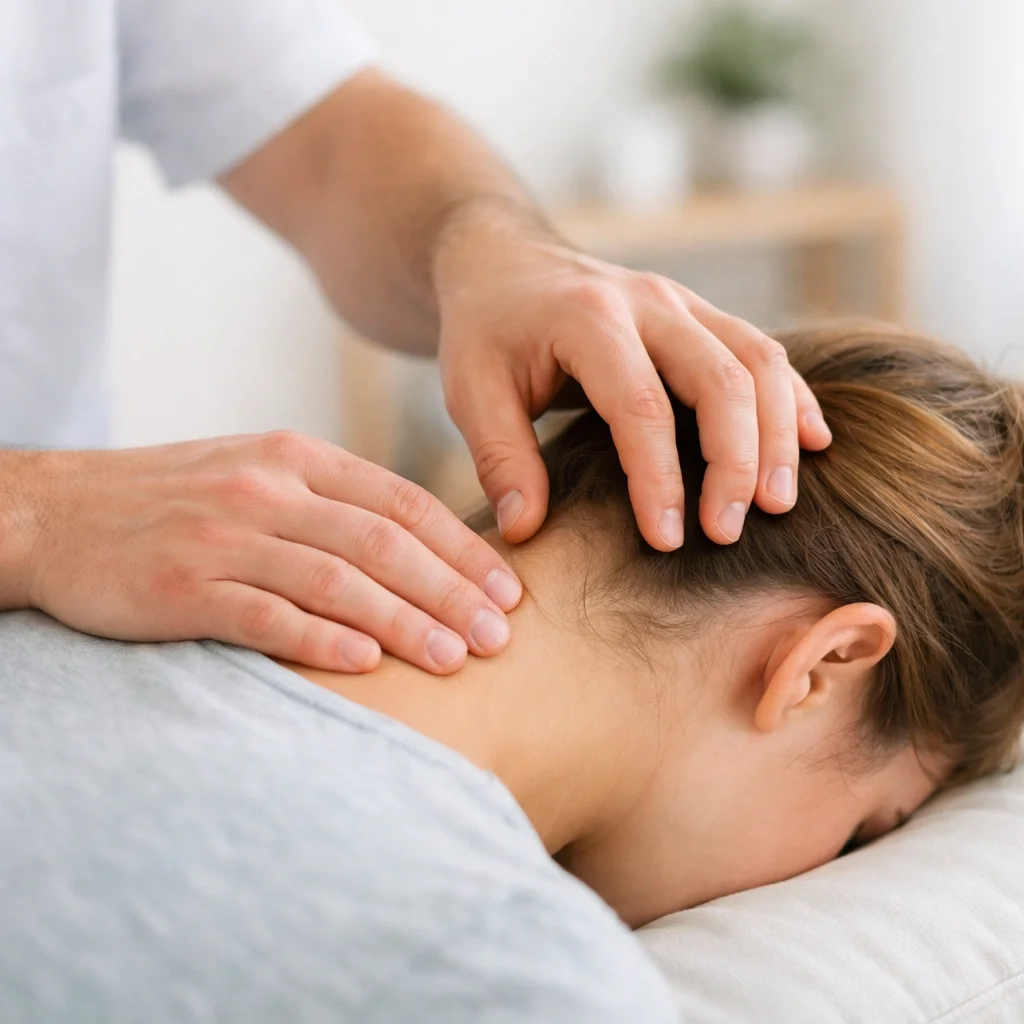
The vagus nerve exits the brainstem right near the Atlas (the very first vertebra in your neck). If your upper neck is misaligned, common in our era of "Tech Neck,": it can create physical pressure or interference with the nerve’s ability to transmit signals.
At Carlucci Chiropractic & Wellness, we specialize in identifying these structural interferences. By gently adjusting the spine, we help "clear the line," allowing your vagus nerve to do its job properly. If you’re dealing with the fallout of a desk job, check out our Chiropractic strategy for Tech Neck.
Functional Medicine & Root Cause Care
We believe in a holistic approach. It’s not just about the adjustment; it’s about what you’re putting in your body. Inflammation is the enemy of the vagus nerve.
If you are eating a highly processed diet, your gut is likely inflamed, sending "danger" signals up the vagus nerve to your brain. This creates a vicious cycle. We often recommend anti-inflammatory protocols, like a Paleo-inspired diet, to support both heart and nerve health. You can find our favorite anti-inflammatory food recommendations here.
With over 25 years of experience serving the Montclair, Lyndhurst, and Whippany communities, we combine traditional chiropractic techniques with functional medicine insights to ensure your nervous system isn't just "surviving," but thriving.
A Spring Challenge for You
As we move through April, we want to challenge you to a "Internal Spring Clean."
Try one of the vagus nerve reset techniques mentioned above every day for a week. Notice how you feel. Do you sleep better? Is your digestion a little more regular? Are you reacting more calmly to the traffic on Route 3?

If you feel like you’re doing all the right things but still feel "stuck" in a state of stress, it might be time for a professional assessment. Your vagus nerve is the key to your body’s natural healing ability, but sometimes it needs a little help to get back on track.
Ready to dive deeper into your wellness journey?
Whether you are looking for chiropractic care in Montclair or Whippany, NJ, or want to explore our functional medicine approach in Whippany or Lyndhurst, we are here to help you find the root cause of your symptoms.
Check out our Linktree for more resources, to shop our recommended supplements, or to book your next visit. Let’s make this spring the season your nervous system finally finds its balance.
