
Brain to Tailbone: C4 – Breath, Sound, and Sinus Health

Welcome to Part 5 of our "Brain to Tailbone" series. In this journey through the spinal column, we have traveled from the "Atlas" (C1) down to the mid-cervical spine. Each segment of your spine serves as a vital relay station, but the fourth cervical vertebra, the C4, holds a unique and powerful position.
If C1 and C2 are the gatekeepers of the brain, C4 is the gatekeeper of the breath and the senses. Located in the center of your neck, the C4 vertebra acts as a primary neurological hub for the nose, lips, mouth, and the intricate tubes that regulate pressure in your ears. When this segment is in alignment, you breathe clearly, speak with resonance, and hear the world with clarity. When it’s not, the signals get crossed, leading to a cascade of "check engine lights" that many people in Montclair mistake for seasonal allergies or simple aging.
The Anatomy of C4: The Center of Communication
The C4 vertebra is a classic example of cervical architecture, but its importance lies in what travels through and around it. Structurally, it provides the necessary curve (lordosis) that supports the weight of your head. But neurologically, it is the anchor for several critical pathways.
One of the most significant roles of the C4 level is its contribution to the phrenic nerve. You may have heard the mnemonic in anatomy classes: "C3, 4, and 5 keep the diaphragm alive." The C4 nerve root provides a major portion of the electrical impulses that tell your diaphragm to contract, allowing you to draw breath.
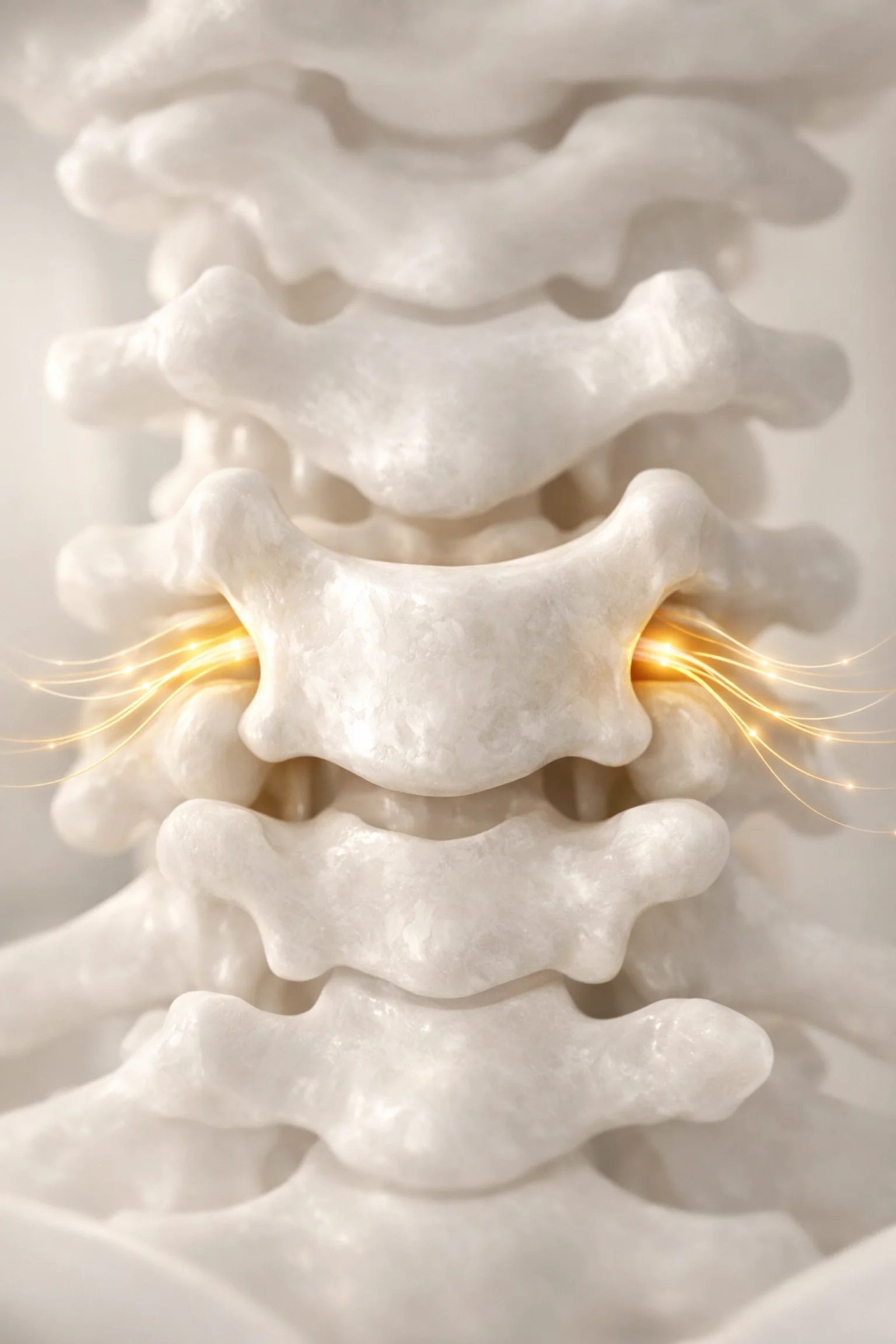
Visual: A detailed AI illustration of the C4 vertebra highlighting the nerve roots and their path toward the diaphragm and facial structures.
Beyond breathing, the nerves exiting at the C4 level innervate the:
Nose and Sinuses: Regulating mucus production and air filtration.
Lips and Mouth: Controlling sensory feedback and muscle coordination for speech and eating.
Eustachian Tubes: Managing the pressure balance between the outer world and the middle ear.
Breath and the Phrenic Connection
Most people think of breathing as a purely lung-centered activity. However, at Carlucci Chiropractic & Wellness, we look at the "master controller": the nervous system. If the C4 vertebra is subluxated (misaligned), it can cause interference in the phrenic nerve.
This interference might not stop you from breathing entirely, but it can certainly make it less efficient. Have you ever felt like you can’t quite take a "full" breath, or that your breathing is shallow and chest-focused rather than deep and diaphragmatic? This is often a sign that the C4-C5 complex is under stress. This lack of oxygenation doesn't just make you tired; it affects the glymphatic system: the brain's dishwasher: which requires proper respiratory pressure to clear out metabolic waste.
Sinus Health and the "Hay Fever" Connection
When we think of hay fever or chronic sinus congestion, we usually blame the pollen count or the cat dander. While these are external triggers, the internal environment determines how your body responds to them.
The nerves originating at the C4 level control the mucosal lining of the nose and the sensitivity of the sinus cavities. If the C4 nerve is irritated due to a spinal misalignment, the body may overreact to environmental stimuli. This results in:
Catarrh: Excessive buildup of mucus in the nose or throat.
Chronic Sinusitis: A feeling of constant pressure behind the eyes and nose.
Adenoid Issues: Particularly in children, C4 subluxations can contribute to inflammation of the adenoids, leading to mouth breathing and sleep disturbances.
By correcting the alignment of C4, we remove the neurological "noise" that causes the immune system to overreact, often providing relief for those who have suffered from "seasonal" allergies all year round.
Sound and Hearing: The Eustachian Tube
One of the most overlooked aspects of C4 health is its relationship with the ears. The Eustachian tube connects the middle ear to the back of the throat, ensuring that pressure is equalized. If the nerves that supply the muscles around these tubes are compromised at the C4 level, the tubes may fail to open or close properly.
This can lead to:
Hearing Loss: A "muffled" sensation as if you are underwater.
Fluid Retention: This often leads to chronic ear infections, especially in younger patients.
Tinnitus: A ringing or buzzing sound that persists despite clear clinical findings in the ear itself.

Visual: A nerve-organ connection chart showing the pathway from the C4 cervical spine to the ear, nose, and mouth.
Subluxation Signals: Is Your C4 Out of Alignment?
In our practice, we often refer to symptoms as a "check engine light." You wouldn't put a piece of tape over a warning light on your car's dashboard and keep driving, yet many people do exactly that with their health by masking symptoms with medication.
As we discussed in our post about the headache you keep ignoring, symptoms are a call for investigation. Common "check engine lights" for the C4 vertebra include:
Frequent "Runny Nose": Even when you aren't sick.
Persistent Cough or Throat Clearing: Often linked to post-nasal drip from C4-related sinus issues.
Mouth Breathing: Difficulty breathing through the nose comfortably.
Shoulder Tension: The muscles at the base of the neck often tighten up to protect a misaligned C4.
In today’s world, the C4 is also a prime victim of "Tech Neck." As we hunch over laptops and smartphones, the mid-cervical spine bears the brunt of the forward head posture. If you’re working remotely, it is essential to understand how to beat tech neck to protect your C4 and your overall respiratory health.
The Chiropractic Approach to C4
At Carlucci Chiropractic & Wellness, we don't just treat the symptoms; we look for the cause. When a patient presents with chronic sinus issues or hearing difficulties, we perform a thorough evaluation of the cervical spine.
Using precise, gentle adjustments, we aim to restore the C4 vertebra to its proper position. This removes the pressure on the exiting nerve roots, allowing the "electrical signals" to flow uninterrupted to the nose, mouth, and ears.
The results can be transformative. Patients often report:
Immediate Sinus Drainage: The "clogged" feeling begins to lift as the nerves regain control over mucosal secretions.
Brighter Hearing: A reduction in that "clogged ear" sensation.
Improved Breath Capacity: A feeling of "lightness" in the chest as the phrenic nerve communication is restored.
Supporting Your Cervical Health at Home
While professional adjustments are the only way to correct a subluxation, you can support your C4 health through daily habits:
Posture Awareness: Keep your ears aligned over your shoulders. Use a lumbar support when sitting to maintain the natural curves of the spine.
Hydration: The intervertebral discs between C3, C4, and C5 need water to remain plump and provide adequate spacing for the nerves.
Anti-Inflammatory Nutrition: Supporting your nervous system with the right foods can reduce overall nerve irritation. Check out our guide on anti-inflammatory foods for a heart-and spine-healthy diet.
Conclusion
The C4 vertebra is a bridge between the upper "thinking" brain and the lower "doing" body. It governs how we take in the world through our senses and how we sustain our lives through our breath. By ensuring this mid-neck segment is functioning at its peak, you are doing more than just avoiding a stiff neck; you are ensuring your body can breathe, hear, and respond to the world around it with ease.
If you’ve been struggling with chronic sinus pressure, "hay fever" that won't quit, or a feeling that your breathing is restricted, it’s time to look at the source.
Ready to get your spine checked?
Explore our services or contact us today to schedule your evaluation.
For more resources, digital products, and to stay connected with Dr. Carlucci, visit our Linktree:
https://linktr.ee/DrKCarlucci
Stay tuned for Part 6, where we move down to the C5 vertebra: the key to shoulder strength and vocal power.
